
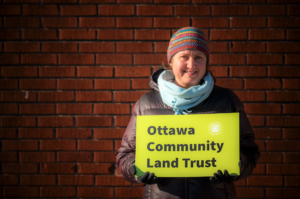
Photo courtesy of Ottawa Community Land Trust.
A model to keep housing affordable, forever
Partners for Affordable Housing is working alongside the Ottawa Community Land Trust (OCLT) to help unlock the acquisition of 622 Cooper Street, a large home in Ottawa’s Centretown neighbourhood that will be preserved as permanently affordable housing.
With committed partners, community investment and financing already aligned, the project is close to becoming a reality. The final $350,000 in non-repayable capital will enable the acquisition to move forward, ensuring the home remains affordable and community-owned for the long term.
“This represents an important direction that we as a community need to take,” says Mike Bulthuis, Executive Director of OCLT. “We need to preserve our existing affordable housing.”
A Partnership Rooted in Community Ownership
Ottawa Community Land Trust works with community partners to acquire, steward and develop land to preserve and expand affordability over time. At the core of its approach is a long-term view: housing held in community ownership can remain stable and accessible for generations.
This project brings together three organizations, each contributing a critical piece.
OCLT will acquire and steward the property. Ottawa Salus, the current owner, will reinvest proceeds into its supportive housing portfolio. Upon acquisition, OCLT will lease the home to Matthew House Ottawa, which will operate it as a reception and transition house for refugees and asylum claimants.
“This transition helps three organizations that are all committed to affordable housing grow,” says Bulthuis. “It’s a win-win-win.”
For Matthew House, the partnership creates stability while allowing the organization to focus on what it does best.
“Right now, we rely on private landlords, and that can come with uncertainty,” says Kailee Brennan, Executive Director of Matthew House Ottawa. “This model gives us a partner who is invested in our success and allows us to keep focusing on supporting refugees as they rebuild their lives.”
What This Investment Makes Possible
The acquisition of 622 Cooper Street will create a stable, welcoming space where refugees can access housing, support and community as they begin their journey in Canada.
Matthew House operates reception homes that are intentionally designed to feel like family environments. Residents share meals, responsibilities and daily life, creating a sense of belonging that extends beyond housing.
“That sense of community is what makes this model different,” says Brennan. “People are not just finding a place to stay, they’re finding connection and support at a time when they’ve often left everything behind.”
Over time, many residents move into permanent housing, often maintaining relationships built during their stay. The model not only provides immediate shelter but helps set the foundation for long-term stability.
From Fragmented Efforts to Coordinated Action
This project reflects a growing shift toward more coordinated, partnership-driven housing solutions.
Through its revolving fund, capitalized by Housing Forever Bonds, OCLT is demonstrating how community investment can be mobilized alongside philanthropic capital to acquire and protect housing.
“This model allows us to own the property while partnering with organizations that deliver services,” says Bulthuis. “It means they can focus on what they do well, while we ensure the housing remains affordable over the long term.”
Matthew House is also contributing to the model by investing a portion of its reserves into the Housing Forever Bonds, creating a circular flow of capital that strengthens both organizations.
“It’s a very aligned approach,” says Brennan. “Our investment helps make the project possible, and in turn, the project supports our ability to deliver housing and services. It all feeds back into the same goal.”
The Role of Philanthropy in Unlocking What’s Possible
While financing and community investment form a strong foundation for this project, a critical gap remains.
“There really isn’t public funding for this kind of work,” says Bulthuis. “There’s no grant we can apply for in the same way as building new housing. That’s why we’re turning to the community to help fill that gap.”
The remaining $350,000 in non-repayable capital will reduce overall debt, ensuring rents remain affordable for residents while maintaining financial sustainability for community investors and lenders.
At this stage, philanthropic capital has an outsized impact. It is the final piece needed to activate a fully aligned partnership and bring the project to life.
Looking Ahead
As housing pressures continue to grow across Canada, preserving existing affordable housing is becoming as critical as building new supply.
Community land trusts offer a model that protects housing as a long-term community asset, while enabling partnerships that strengthen the broader housing ecosystem.
Partners for Affordable Housing works to build the conditions for these collaborations to succeed, aligning capital, partners and projects to accelerate community-led housing solutions.
With the right support at the right moment, projects like 622 Cooper Street can move from near-ready to realized, creating lasting impact for individuals, organizations and communities alike.